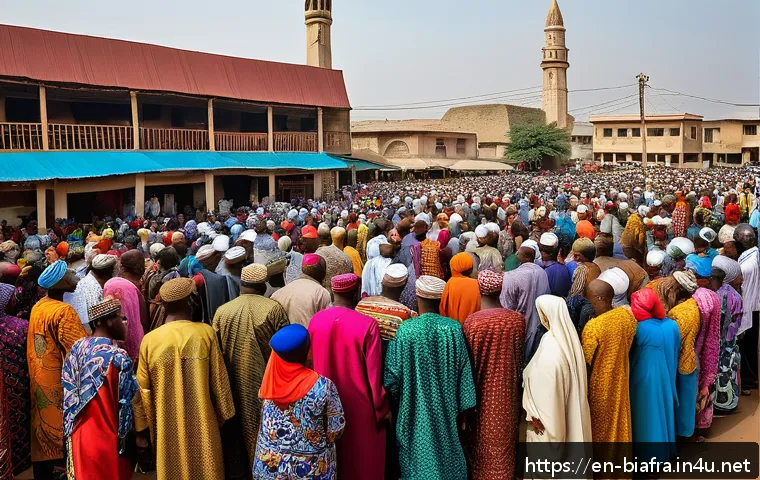
Nigeria’s Civil War reshaped post-war politics by strengthening federal authority, making reconstruction and reintegration central public priorities, and keeping regional identity politically important.

The long-term picture is not one simple outcome: constitutional arrangements, political representation, economic recovery, and public memory developed differently across places and periods.
For a first overview, an introductory history book or a well-curated museum resource can provide useful context. Students writing essays and researchers testing an argument should move beyond summaries to scholarly journals, archival records, and university research databases.
Paid academic access can be useful when you need full citations, specialist debates, or primary-source collections, but it is not necessary for every reader.
The safest approach is to build a timeline first, then compare sources that explain policy, political institutions, and local experience separately.
At a Glance
- Federal power: Post-war governance is commonly examined through the growth of central authority and changing federal arrangements.
- Reintegration: Reconstruction, reconciliation, and political inclusion became major questions, although their effects require source-based evaluation.
- Identity and representation: Regional memory and Igbo political representation remained significant subjects in later political debate.
| Research topic | Evidence to look for | Best source type | When paid academic access may be worthwhile |
|---|---|---|---|
| Federal power and constitutional change | Official documents, legal texts, institutional histories, dated policy records | Academic books, archival collections, scholarly articles | When you need complete citations or specialist analysis of federal institutions |
| State creation and political representation | Maps, government records, election research, regional case studies | University databases and peer-reviewed journals | When a research project requires multiple regional perspectives |
| Reconstruction and reintegration | Policy documents, local studies, contemporary reporting, oral-history methodology | Archives, academic monographs, carefully sourced documentaries | When access to primary material or full documentary collections matters |
| Identity, memory, and current political references | Author background, publication date, stated evidence, comparison with scholarly work | Peer-reviewed research plus reputable public-history resources | Usually only for advanced research rather than a basic introduction |
The Short Answer: What Changed in Nigerian Politics After the War?
The most useful short answer is that post-war Nigerian politics can be studied through three connected changes: stronger federal authority, an emphasis on reconstruction and reintegration, and continuing debate over regional identity and political representation. These are broad analytical categories, not a claim that every community experienced the period in the same way. A reliable account should identify the date, place, institution, and evidence behind each conclusion.
Federal Authority Became More Central to Post-War Governance
Many interpretations of the post-war period focus on how federal authority became more central to governance. This topic is best approached through constitutional arrangements, administrative structures, and the distribution of political power rather than through broad claims about political intent. Look for sources that explain what changed, when it changed, and how those changes affected different regions.
An introductory book may be enough if you only need a general framework. For a paper or detailed research project, consult academic books or journal articles that cite official records and distinguish policy language from later interpretation. Institutional evidence matters more than a dramatic headline or an unsourced online claim.
Reconciliation and Reintegration Became Major Political Priorities
Post-war reconstruction and reintegration are essential parts of the political story. They should not be treated only as economic questions, because they also involve citizenship, political participation, public trust, and the relationship between national policy and local experience. A source that describes reconciliation should make clear whether it is discussing official policy, public rhetoric, or measured outcomes.
Claims about whether a policy “succeeded” require especially careful verification. Different communities, social groups, and time periods may produce different conclusions. When possible, compare a general history with a regional study, a scholarly article, or a primary-source collection before repeating a broad judgment.
Regional Identity and Representation Remained Politically Significant
The end of war did not make regional identity irrelevant. Questions around representation, belonging, public memory, and the political position of Igbo communities remained important in historical interpretation. However, it is misleading to treat Igbo political experience as uniform or to assume that one writer’s account represents all local perspectives.
A careful reader separates three issues: what public institutions did, how people described their experience, and how later political actors interpreted the past. These categories may overlap, but they are not identical.
Comparing the Main Political Changes After 1970
Comparing post-war political change works best when each issue is placed on its own track. Federalism concerns institutional power. Reconstruction concerns policy and recovery. National unity and regional memory concern political language, identity, and historical interpretation. Combining all three into one conclusion can hide important differences.
Federalism, State Creation, and the Distribution of Political Power
Research on federalism and state creation should ask how political power was formally distributed and how those arrangements were understood in practice. Useful evidence may include official documents, institutional histories, maps, and scholarly work that explains regional context. Do not assume that an administrative change had the same political meaning everywhere.
For a classroom assignment, begin with an academic overview that defines the relevant institutions. For advanced work, use a subscription research database to locate competing interpretations and citations. The most valuable database access is access that helps you trace an argument back to its evidence, not simply access that gives a source an academic label.
Reconstruction Policy Versus Political Inclusion
Reconstruction policy and political inclusion should be examined separately before they are connected. A discussion of rebuilding may not answer whether groups felt represented politically. Likewise, evidence of political participation does not automatically demonstrate equal recovery or full reconciliation.
This distinction helps prevent an overly simple conclusion. Ask: What policy is being discussed? What evidence shows implementation? Who is included in the source? What time period does the author cover? A source that answers these questions clearly is generally more useful than one that relies mainly on broad political language.
National Unity Narratives Versus Regional Memory
National unity narratives often emphasize shared political goals, while regional memory may preserve different priorities, losses, and interpretations. Neither category should be dismissed automatically. The key is to identify the author, audience, date, and evidence base for each account.
Documentaries and public commentary can introduce these debates clearly, but they should be checked against books, journal articles, or archival materials. A compelling interview or film segment may illuminate a perspective without being sufficient evidence for a nationwide conclusion.
How to Assess the Value of Different Historical Sources
Source selection should follow your purpose. A reader seeking orientation needs clear chronology and definitions. A student needs citations and competing interpretations. A researcher may need archival records, specialist scholarship, and careful attention to authorship. Use the source type that matches the question.
When an Introductory History Book Is Enough
An introductory history book is often enough when you need a basic timeline, major themes, and vocabulary for further reading. Choose one that identifies its sources, distinguishes fact from interpretation, and provides a bibliography. This is usually the most efficient first step before entering journal databases or archival catalogues.
Before buying a history book or choosing a library edition, check the table of contents, publication date, author credentials, notes, and bibliography. These details help you see whether the book is a broad survey or a narrowly focused interpretation.
When Academic Journals, Archives, or University Databases Are Worth the Cost
Paid academic databases and library subscriptions are most useful when your work requires peer-reviewed debate, full-text journal access, specialist books, or searchable archival material. They can be worthwhile for a dissertation, extended essay, university course, or research project with formal citation requirements.
They may be unnecessary for a casual reader who only wants a dependable overview. First check whether a public library, school library, university library, or open-access publication provides the material you need. If you do use a paid resource, search for sources with notes, clear methodology, and relevant regional or institutional context.
Questions to Ask Before Relying on Documentaries or Political Commentary

Ask simple questions before relying on a documentary or commentary: Who made it? When was it published? What evidence does it show? Does it name historians, archives, interviewees, or documentary records? Does it acknowledge uncertainty or competing interpretations?
Political commentary can be useful for understanding how history is invoked in public debate. It is less reliable as a stand-alone account of past policy. Treat modern references to post-war grievances carefully; they should not be presented as direct causation without verifiable evidence.
Key Cautions When Interpreting Post-War Politics
The strongest safeguard against oversimplification is to avoid turning a complex history into a single political lesson. Post-war change unfolded across different places, institutions, and social groups. Good research states its limits rather than pretending every question has one settled answer.
Avoid Treating One Ethnic or Regional Experience as Universal
Igbo political representation is an important subject, but it should not be reduced to one shared experience or one permanent political position. Local circumstances, class, generation, location, and period can affect how people understood post-war politics. Use sources that specify whose experience is being discussed.
Separate Documented Policy From Later Political Claims
Official policy, public memory, and later political claims may all refer to the same event in different ways. Keep them separate in your notes. A documented policy should be supported by a verifiable record; an interpretation should be attributed to its author; a present-day claim should be evaluated in its own context.
Check Dates, Authorship, Evidence, and Institutional Context
Before using any source, check four basics: date, author, evidence, and institutional context. A source published much later may offer useful analysis but cannot automatically substitute for a contemporary record. A primary document may reveal official language but may not explain how that policy was experienced locally.
Different Perspectives: Researchers, Students, and General Readers
Different readers need different levels of detail. The shared goal is not to find one final interpretation, but to understand what each source can and cannot establish. A balanced reading list makes this easier.
Building a Basic Timeline for First-Time Readers
First-time readers should begin with a simple timeline: the war’s end, immediate post-war governance, reconstruction and reintegration debates, later institutional developments, and later public memory. Add sources gradually. This prevents later political arguments from being projected backward without context.
Comparing Scholarly Interpretations for Essays and Research Projects
For essays, compare interpretations rather than collecting quotations that all say the same thing. One scholar may focus on federal institutions, another on regional political experience, and another on memory or reconstruction. Explain their evidence, scope, and limits before deciding which argument is more persuasive for your question.
A university course reading list or academic database can be particularly useful at this stage because it helps locate debate, not just background. Look for the bibliography and cited archival material behind each argument.
Evaluating Present-Day Political References Responsibly
Present-day references to Biafra, the war, or post-war grievances should be treated as contemporary political language unless evidence establishes a direct historical connection. Do not assume continuity simply because similar terms are used. Compare the claim with dated scholarship and clearly distinguish historical evidence from political advocacy.
Research Source Selection and Comparison Summary
Choose sources according to the depth of your question. Books are usually best for context and a readable timeline. Peer-reviewed journals are better for contested interpretations and detailed arguments. Archives are essential when you need primary evidence, while university courses can provide a structured reading path. Documentary subscriptions can be useful for visual context and interviews, but should be cross-checked against cited scholarship.
Before selecting a paid resource, check whether you need full citations, specialist journal access, archival searches, or a guided course structure. If not, an introductory book, public library catalogue, museum resource, or open-access article may be enough. Build a reading list with more than one perspective before drawing a conclusion.
If you are comparing a book, database, course, or documentary service, check the official page for access terms, catalogue details, citation tools, and available source information.
In Closing
Nigeria’s post-war political history is best understood as a set of related but distinct questions about federal power, reconstruction, representation, and memory. Broad summaries are useful starting points, but they should not replace evidence-based research. The clearest work separates immediate post-war policy from longer-term political development. It also recognizes that regional and individual experiences require careful sourcing.
Useful Things to Know
1. Start with a timeline before reading political commentary.
2. Use books for context, journals for scholarly disagreement, and archives for primary evidence.
3. Check whether a documentary identifies its evidence and contributors.
4. Treat modern political comparisons as claims requiring verification, not automatic historical facts.
Important Notes
The political effects of the war varied by region, period, social group, and interpretation. This guide provides a research framework rather than a final judgment on any policy or community experience. Claims about individual motivations, local outcomes, or the effectiveness of reconciliation measures should be verified through primary sources or credible scholarly research.
Frequently Asked Questions
Q1. What were the most important political effects of Nigeria’s Civil War?
A1. A useful framework focuses on stronger federal authority, the political importance of reconstruction and reintegration, and continuing questions about regional identity and representation. The precise impact differs by location, period, and source interpretation, so these themes should be researched separately.
Q2. Are paid academic databases or history books worth using for research on post-war Nigeria?
A2. An introductory history book is often sufficient for background and a basic timeline. Paid academic databases are more valuable when you need peer-reviewed articles, full citations, specialist scholarship, or archival access for formal research.
Q3. How can readers distinguish documented post-war policy from political interpretation?
A3. Check the date, author, evidence, and institutional context. Use official or archival records for documented policy, then compare them with scholarly analysis and clearly attributed political commentary. Do not treat later claims as direct proof of earlier policy or outcomes without supporting evidence.