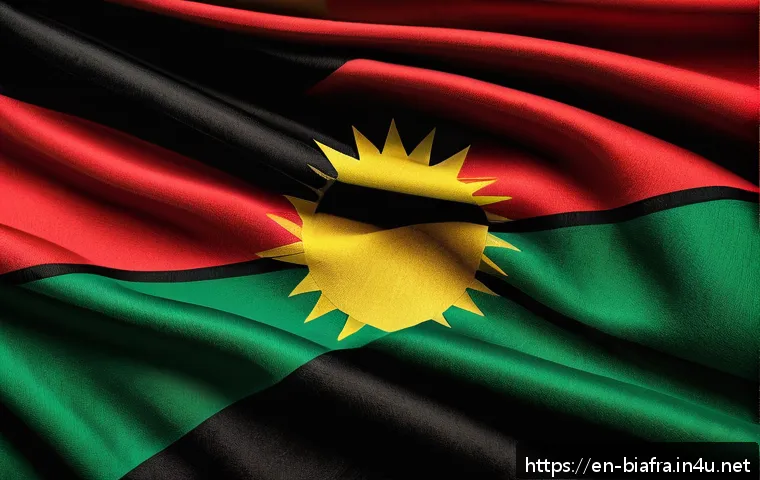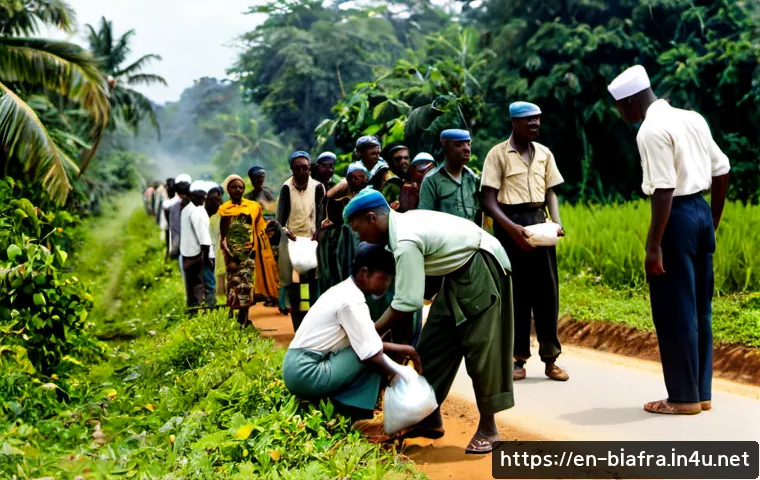
Biafra’s 1967 secession from Nigeria led to a war involving organized Biafran forces, civilian support networks, and varied local armed or self-defense groups.
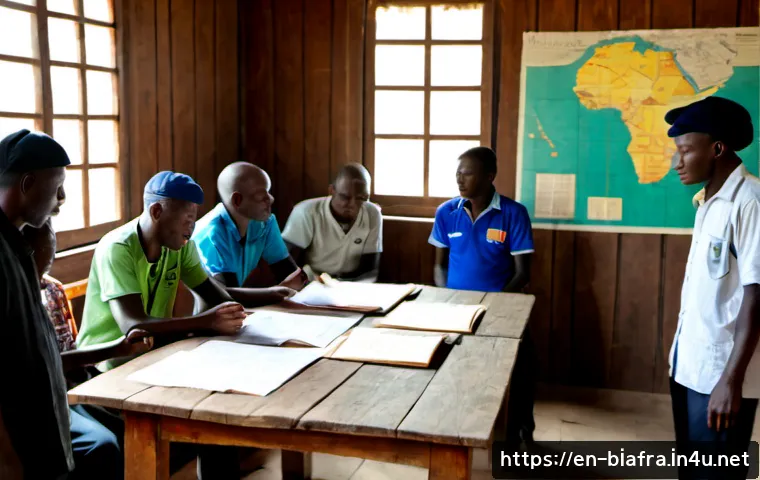
Local militias cannot be treated as one uniform institution because their command links, activities, and records differed by community. For careful study, compare academic books, archival collections, oral histories, and documentaries by the evidence they show rather than by the drama of their narrative.
This is especially important where membership figures, weapons access, or formal command relationships remain unclear. A good resource explains its sources, distinguishes verified material from memory, and leaves unresolved claims open.
The right format depends on whether you need a quick overview, school research, or deeper historical investigation.
At a Glance
- The Republic of Biafra declared secession from Nigeria in 1967; the war ended with Biafra’s surrender and reintegration in 1970.
- Organized military units, local defense groups, and civilian support networks had different roles and should not be merged into one category.
- Claims about specific militias require regional context because wartime records are incomplete and later memories may conflict.
| Group or Role | Typical Research Focus | Useful Evidence | Main Limitation |
|---|---|---|---|
| Organized Biafran forces | Military structure, operations, and command | Military records, academic studies, maps | Records may be incomplete or contested |
| Local defense groups | Community protection, local control, and security | Oral histories, local accounts, archival material | Formal links to central command may be unclear |
| Civilian support networks | Displacement, evacuation, food shortages, and local survival | Memoirs, interviews, documentary collections | Personal memories require corroboration |
What the Biafran Independence Movement Sought and Why Local Armed Groups Matter
The 1967 secession and the Nigerian Civil War in brief
The Republic of Biafra declared secession from Nigeria in 1967, beginning the Nigerian Civil War. The conflict ended in 1970 with Biafra’s surrender and reintegration into Nigeria. Any discussion of armed groups during this period should begin with that wider political and military setting, rather than isolating a single village or community story from the war around it.
Why “local militias” is an imprecise but useful research term
Local militia is a practical research label, not proof of one shared organization. It may refer to armed community defense, locally organized security activity, or other forms of self-defense. Before using the term, ask what the source actually describes: a formal unit, a temporary local group, or civilians responding to insecurity.
Three key distinctions: regular forces, community defense, and civilian support
Organized Biafran forces should be distinguished from community-based defense groups and from civilian volunteers or support networks. Civilian experiences were also shaped by displacement, food shortages, insecurity, and changing local control. These categories can overlap in a personal account, but they should not be assumed to have had the same command structure, training, or responsibilities.
Comparing Organized Biafran Forces and Community-Based Militias
Command structure, recruitment, training, and equipment
Formal military structures are more likely to be discussed through command and operational records. Local armed groups may be described through later testimony or community memory instead. Exact membership, recruitment numbers, weapons access, and command relationships are not always available. A careful history states what is documented and marks what remains uncertain.
Geographic reach and local knowledge
Community-based groups, where they existed, may be discussed in relation to local knowledge and rapidly changing conditions. However, local relevance does not automatically establish formal integration into Biafran command structures. Regional context matters: the same label may describe different arrangements in different parts of the former Eastern Region.
Evidence quality: military records, oral histories, and later accounts
Military records can help with structure and chronology. Oral histories can preserve civilian perspectives that official records overlook. Later accounts can be valuable but may reflect political memory or recollections gathered years after the conflict. Strong academic books and archival collections explain how these materials are weighed against each other.
How Local Militias Could Affect Communities During the Conflict
Checkpoints, intelligence, evacuation, and local defense
Sources may describe local armed activity in connection with checkpoints, intelligence, evacuation, or community defense. These functions must be examined case by case. A description of a checkpoint or evacuation effort does not, by itself, establish who controlled it, who participated, or whether it was formally directed by a larger military structure.
Risks to civilians and the importance of avoiding romanticized narratives
Wartime accounts should not romanticize armed participation. Civilians faced insecurity, displacement, and food shortages, while local control could change quickly. A documentary or memoir that presents only heroism, only betrayal, or a single unified community voice may need to be balanced with other evidence.
Why local experiences varied across the former Eastern Region
Local experience depended on changing conditions and community circumstances. For that reason, broad claims about “the militia” in all areas can mislead readers. The most responsible approach is to name the location, period, source type, and level of certainty behind a claim.
Research Methods, Common Mistakes, and Safe Interpretation
How to assess memoirs, interviews, photographs, and wartime claims
Start with basic questions: Who created the source? When was it created? What was the author or speaker able to observe directly? Does an academic study, archival record, map, or independent interview support the claim? Photographs may show people or places, but they do not automatically prove identity, affiliation, date, or command status.
Avoiding the mistake of treating all armed civilians as one group
Do not use “armed civilian,” “volunteer,” “local defense,” and “regular soldier” as interchangeable terms. Each may describe a different role. If a source does not identify the relationship to Biafran command, write that the relationship is unconfirmed rather than filling the gap with assumption.
Separating verified history from political memory and unsupported claims

Political memory can shape how wartime events are remembered and retold. This does not make memory useless; it means memory should be identified as memory. Precise casualty figures, local recruitment totals, and individual motivations should remain unresolved when reliable primary testimony or corroborated historical research is unavailable.
Finding the Right Historical Resource for Your Purpose
Choosing between academic books, oral-history projects, documentaries, and archives
For a broad introduction, choose an academic book that explains the war’s chronology and sources. For civilian perspective, an oral-history project may be more useful, provided it identifies interview methods and limits. A documentary can offer accessible context, while an archive may be better for readers who need original records, catalog details, or multiple source types.
What to compare before paying for a course, digital archive, or specialist publication
Compare the author’s research method, source citations, geographic scope, access conditions, and whether the material separates evidence from interpretation. A paid educational subscription or digital archive is more useful when it clearly states what records, lessons, or viewing access are included. Check the official description and access terms on the relevant page before choosing.
Questions to ask when evaluating a historian or guided research service
Ask whether the work identifies its primary sources, acknowledges conflicting accounts, and distinguishes formal military forces from local armed groups. Also ask whether a specific community claim can be verified through more than one kind of evidence. A reliable guided research service should explain its limits, not promise certainty where records do not support it.
Selection Criteria and Comparison Summary
Best choice for a quick overview, school research, or deeper scholarly study
A documentary or accessible overview may suit a quick introduction. For school research, prioritize cited academic books and reputable archival material. For deeper study, combine scholarly analysis with oral histories, maps, and records from more than one perspective.
Reliability checklist before citing a source
Check whether the source identifies its author, date, location, evidence base, and limitations. Look for clear distinctions between organized forces, local defense groups, and civilian support. Prefer sources that explain uncertainty rather than presenting disputed details as settled fact.
When conflicting accounts should remain unresolved
When accounts disagree about membership, command, activities, or weapons access, the correct conclusion may be that the evidence is insufficient. Leaving a question open is more accurate than converting an unverified account into a historical certainty.
Selection Criteria and Comparison Summary
Choose an academic book for cited context and structured interpretation. Choose an archive when you need original materials and can assess their limits. Choose oral-history collections for lived experience, while checking corroboration. Choose documentaries for orientation, then verify major claims in documented research. Before subscribing to an educational resource or purchasing a specialist publication, review its source list, regional coverage, and stated access conditions.
In Closing
The history of Biafra’s independence movement cannot be reduced to a single story of formal armies or local militias. Organized forces, community defense, and civilian support networks occupied different and sometimes overlapping spaces. The strongest research keeps those distinctions visible and treats gaps in the record honestly. That approach gives both historical evidence and civilian experience the care they require.
Useful Things to Know
1. A local label does not prove a unified organization.
2. Oral testimony is valuable, but it should be placed beside other evidence where possible.
3. Maps and chronology can help test whether a local claim fits changing wartime control.
4. A source that openly discusses uncertainty is often more useful than one that offers dramatic certainty.
Important Notes
Wartime records may be incomplete, politically contested, or based on memories collected years later. Exact local militia membership, command structures, casualty figures, recruitment numbers, and weapons access may require further verification. Individual motives should not be assumed without reliable testimony or corroborated historical research.
Frequently Asked Questions
Q1. Were local militias officially part of the Biafran military?
A1. Not necessarily. Some local armed or self-defense groups may have had relationships with wider Biafran structures, but this cannot be assumed for every community. Formal integration must be supported by reliable evidence for the specific group and period.
Q2. What is the safest way to research community militias during the Biafran War?
A2. Compare academic studies, archival material, oral histories, maps, and documentary evidence. Identify the location and date of each claim, and keep uncertain details marked as uncertain when sources do not agree.
Q3. Are documentaries or books better for learning about Biafra’s local wartime experiences?
A3. They serve different purposes. Documentaries can provide a clear entry point and personal testimony, while well-cited academic books usually offer more room to explain sources, regional variation, and conflicting interpretations. Using both can provide a more balanced view.