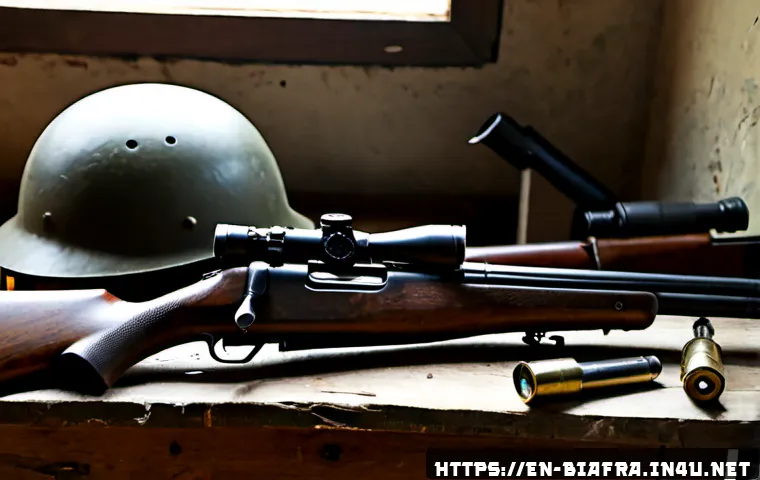
The Nigerian Civil War (1967–1970) involved imported aircraft, small arms, artillery, improvised weapons, and locally adapted equipment. This guide separates well-documented examples from claims that require careful source checking.
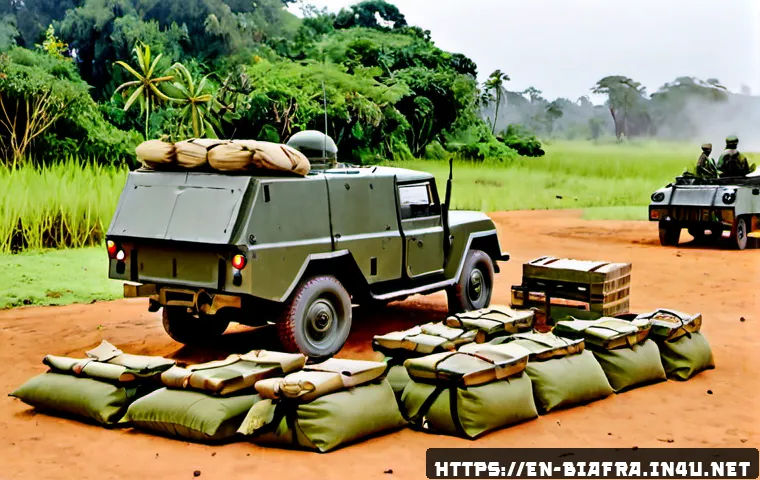
The Nigerian Civil War of 1967–1970 was fought with a mixed arsenal of imported, inherited, captured, and improvised weapons. Federal Nigerian forces used foreign-supplied equipment, including Soviet-built MiG-17 fighters, while Biafran forces relied heavily on adapted light aircraft, available ground weapons, and locally improvised systems such as Ogbunigwe devices. The most useful way to study these weapons is by battlefield role rather than by dramatic lists of alleged equipment. Exact inventories and individual weapon configurations remain difficult to verify, so careful source comparison matters. For readers choosing military-history books or documentaries, sources that distinguish confirmed evidence from wartime claims are usually the better investment. Museum publications, archival images, and specialist histories can also help test a popular claim before repeating it.
At a Glance
- Federal forces used imported and foreign-supported equipment, including Soviet-built MiG-17 fighter aircraft.
- Biafran forces combined available and captured matériel with adapted light aircraft, including MFI-9B rocket-carrying aircraft.
- Both sides depended on ammunition, spare parts, transport, and trained personnel as much as on the weapons themselves.
| Weapon Category | Known Users | Battlefield Role | Source Confidence |
|---|---|---|---|
| MiG-17 fighter aircraft | Nigerian Air Force | Air operations | High |
| MFI-9B adapted light aircraft | Biafran forces | Rocket attack role | High |
| Small arms, mortars, and artillery | Both sides | Infantry and fire support | High at category level |
| Armored vehicles and transport aircraft | Both sides, depending on availability | Mobility, protection, logistics | High at category level |
| Ogbunigwe devices and rocket systems | Biafran forces | Improvised explosive and rocket roles | High for general use; details require checking |
The Short Answer: A Mixed War of Imported and Improvised Weapons
The Nigerian Civil War, also called the Biafran War, was not defined by one famous rifle, tank, or aircraft. It was shaped by a changing mix of equipment acquired through foreign suppliers, inherited stocks, capture, adaptation, and local production. A weapon’s value depended on whether it could be supplied, maintained, armed, and operated under wartime pressure.
Federal Nigerian forces and foreign-supplied equipment
Nigerian federal forces received military support and equipment from several foreign suppliers, including Soviet-bloc sources. This access mattered because regular deliveries, ammunition supply, technical support, and replacement parts could influence military capability over time. Imported aircraft and heavier ground equipment gave federal forces options that were difficult to reproduce through local improvisation.
Biafran forces, captured matériel, and local adaptation
Biafran forces used a varied collection of available equipment. This included weapons already in circulation, captured matériel, adapted platforms, and locally improvised systems. The story is therefore not simply one of “modern” weapons versus “primitive” weapons; it is a story of adaptation under severe supply constraints.
Why weapons lists need source caution
Long online lists can create a false impression of certainty. Exact quantities delivered, captured, destroyed, or operational at a particular moment are often unclear. A reliable military-history source should state whether it is discussing a confirmed type of equipment, a photograph-based identification, or a claim that still needs archival support.
Air Power: Jets, Light Aircraft, and Improvised Strike Roles
Air power received particular attention during the conflict, but aircraft availability did not automatically equal effective air power. Airframes required fuel, trained crews, weapons, maintenance, airfields, and spare parts. Those practical factors are essential when comparing aircraft claims in books, documentaries, or illustrated reference guides.
Nigerian Air Force MiG-17 operations
The Nigerian Air Force operated Soviet-built MiG-17 fighter aircraft during the war. Their presence shows the importance of foreign-supplied equipment to federal air operations. When studying the MiG-17’s role, readers should be cautious about claims that assign exact sortie totals, weapon loads, or damage results without clear operational records.
Biafran MFI-9B “Minicoin” aircraft and rocket attacks
Biafran forces used Swedish MFI-9B light aircraft adapted to carry rockets. These aircraft became closely associated with the operations of Swedish pilot Carl Gustaf von Rosen. Their significance lies in their adapted strike role: a light civilian-style aircraft could be employed in a military context when conventional combat aircraft were unavailable or difficult to sustain.
Aircraft availability versus operational readiness
An aircraft listed in a source may not have been ready to fly, armed for a mission, or supported by enough trained ground personnel. For that reason, the better question is often not “Which aircraft existed?” but “Which aircraft could be kept operational?” Good archival documentaries and specialist aviation histories should explain this distinction rather than treating every reported aircraft as equally active.
Ground Combat Equipment and Battlefield Roles
Ground combat involved the equipment that sustained infantry operations: small arms, machine guns, mortars, artillery, armored vehicles, and transport. These categories mattered across the conflict, but technical descriptions should not be mistaken for proof of a weapon’s frequency or effectiveness in every area.
Small arms, machine guns, and infantry supply
Small arms and machine guns were central to infantry combat on both sides. Yet the key historical issue is not only weapon type. Ammunition supply, repair capacity, training, and replacement weapons determined whether an infantry unit could continue operating. A reference book that explains supply conditions is often more useful than one that merely provides a long equipment list.
Mortars, artillery, and armored vehicles
Mortars and artillery added indirect firepower, while armored vehicles could offer protection and mobility where conditions allowed. Transport aircraft and other logistical assets also mattered because weapons had to reach units with ammunition and maintenance support. Readers should avoid assuming that every vehicle or artillery piece shown in a photograph was typical of the entire conflict.
The importance of ammunition and maintenance logistics
Military equipment is a system, not a display item. A weapon needs compatible ammunition, transport, trained operators, mechanics, and communication between units. This is why maintenance logistics can be as important as nominal technical performance when assessing the Nigerian Civil War.
Biafran Improvised Weapons and Wartime Innovation
Biafra’s locally improvised weapons are among the most discussed aspects of the war. They are important evidence of wartime innovation, but they are also vulnerable to exaggeration in retellings. The strongest accounts describe what is documented and clearly mark what remains uncertain.
Ogbunigwe explosive devices and rocket systems
The name Ogbunigwe was applied to Biafran explosive devices and rocket systems. These weapons are a notable example of local improvisation under wartime conditions. However, the precise configuration, production history, and battlefield effect of every Ogbunigwe variant should be checked against specialist histories, museum material, archival records, or carefully captioned photographs.
Local manufacturing under blockade conditions
Local adaptation became especially significant where imported equipment and replacement parts were limited. Improvisation could address immediate tactical needs, but it also faced limits in materials, consistency, testing, transport, and production capacity. Treating improvised weapons as a practical response to constraint is more accurate than turning them into myths.
Avoiding exaggerated claims about improvised weapons

Wartime propaganda and later popular accounts can blur the line between a documented device and a sweeping claim about its effect. Look for evidence that connects a description to a date, location, photograph, archive, or corroborated operational account. If a source offers remarkable claims without showing how it knows them, caution is appropriate.
How to Assess Historical Weapon Claims Safely and Accurately
A careful research method protects readers from recycled errors. The best approach is to compare multiple source types and ask what each source can genuinely establish. A single photograph may confirm that an item appeared somewhere, but not necessarily how widely it was used.
Compare photographs, archival records, and specialist histories
Use photographs alongside archival documents and reputable specialist histories. Photographs can help identify visible features, while written records may provide context about supply, use, or maintenance. A well-edited academic history may be less visually detailed than an illustrated guide, but it can provide stronger context for competing claims.
Watch for misidentified aircraft and recycled images
Aircraft and armored-vehicle images are frequently reused without full captions. Check whether an image is dated, whether its location is known, and whether the caption identifies the original collection. Caption quality matters: a vague image caption should not be treated as proof of a precise weapon variant or operational story.
Separate verified details from wartime propaganda
Both wartime reporting and later retellings may contain claims intended to persuade rather than document. Separate broad facts—such as the use of MiG-17s or adapted MFI-9B aircraft—from uncertain details about exact strength, armament, or battlefield results. This approach makes research more accurate without dismissing the human and historical importance of the conflict.
Choosing Reliable Books, Documentaries, and Reference Sources
When selecting a military-history book, archival documentary, or museum publication, prioritize source transparency. The best resources identify their evidence, distinguish confirmed equipment from disputed reports, and explain the logistical setting of the war. A glossy illustrated guide can be useful for recognition, while an academic edition may be better for context and citations.
What makes a military-history source worth buying or borrowing
Look for an author’s source notes, archival references, clear photo captions, and a willingness to acknowledge uncertainty. A useful title should cover more than weapon names; it should explain supply routes, foreign support, maintenance, and the changing circumstances faced by both sides. Borrowing from a library can be a sensible first step before purchasing a specialist history book.
Comparing academic histories, illustrated guides, and documentaries
Academic histories are often strongest for context and disputed claims. Illustrated reference guides can help with visual identification but should be checked for caption quality. Documentaries can add interviews and archival footage, yet viewers should note whether the production identifies its archival material and separates narration from verified documentation.
A practical checklist for further research
Ask whether the resource names its sources, dates its photographs, distinguishes equipment categories from exact inventories, and discusses logistics. Check whether remarkable claims are corroborated in another serious source. For books, documentaries, and museum publications, review the edition details and source notes on the relevant product or catalogue page before choosing.
Selection Criteria and Comparison Summary
Before choosing a history book, documentary, or museum reference, check these points: clear citations, dated and captioned images, discussion of supply and maintenance, separation of confirmed facts from uncertain claims, and balanced treatment of federal and Biafran forces. Choose an illustrated guide for visual comparison, an academic history for deeper context, and a museum publication for object-focused documentation. Official descriptions and full edition details can be checked on the relevant page before buying or borrowing.
Closing Thoughts
The weapons of the Nigerian Civil War cannot be understood through a simple inventory alone. Federal imported equipment, Biafran adapted aircraft, conventional ground weapons, and improvised systems all formed part of the conflict. The most reliable research keeps logistics, maintenance, and source quality in view. Where evidence is incomplete, it is better to state the uncertainty than to fill gaps with dramatic claims.
Useful Research Notes
1. A weapon’s battlefield role may be better documented than its exact quantity.
2. Operational readiness depends on fuel, ammunition, spare parts, transport, and trained personnel.
3. A photograph can support identification, but it may not prove widespread use.
4. Museum catalogues and archival captions can be valuable checks against recycled online images.
Important Limitations
Exact numbers of weapons delivered, captured, destroyed, or operational during the war require verification from reliable records. The precise armament of every aircraft, vehicle, and improvised device is not fully established in all cases. Claims about individual weapon effectiveness, covert transfers, or third-party involvement should be treated carefully unless corroborated by strong archival or specialist evidence.
Frequently Asked Questions
Q1. What were the most important weapons used by Nigerian federal forces during the civil war?
A1. Federal forces used a mix of small arms, mortars, artillery, armored vehicles, transport aircraft, and foreign-supplied equipment. A clearly documented example is the Nigerian Air Force’s use of Soviet-built MiG-17 fighter aircraft. Exact inventories and operational totals require source checking.
Q2. Did Biafra have fighter jets, or did it mainly use converted light aircraft?
A2. Biafran forces are notably associated with adapted Swedish MFI-9B light aircraft carrying rockets, linked to Carl Gustaf von Rosen’s operations. These adapted aircraft are better documented in the available overview than claims about a broader Biafran fighter-jet force.
Q3. What should readers look for when choosing a reliable book or documentary about Biafran War weapons?
A3. Look for citations, archival references, well-captioned photographs, clear separation of confirmed facts from disputed claims, and discussion of logistics. A reliable resource should explain not only what equipment existed, but also how supply, maintenance, ammunition, and trained personnel affected its use.