Nigeria, a nation rich in diversity and complex history, has long grappled with the echoes of its past, particularly the profound events surrounding the Biafran independence movement and the evolution of its constitution.
It’s a topic that, even decades later, continues to ignite passionate discussions and shape the country’s political landscape, proving that history is never truly in the past, but always a living part of our present.
Just recently, as of October 2025, we’ve seen renewed calls from governors and traditional leaders to formally enshrine the role of monarchs in the constitutional framework, highlighting how deeply issues of governance and identity are intertwined with the very fabric of Nigeria’s foundational documents.
Simultaneously, the ongoing legislative efforts to amend the 1999 Constitution, with the House of Representatives aiming to conclude its review by December 2025, underscore a continuous quest for a more legitimate and representative Grundnorm that truly reflects the will of its diverse people.
I’ve been following these developments closely, and what strikes me most is how the specter of Biafra—a movement that sought self-determination for the Igbo people—still resonates in contemporary debates about federalism, resource control, and equitable power distribution within Nigeria.
The calls for Biafran independence haven’t faded; instead, they’ve transformed, fueled by persistent feelings of marginalization and economic deprivation in the southeast, making organizations like the Indigenous People of Biafra (IPOB) a significant, albeit controversial, part of Nigeria’s political discourse today.
It’s a poignant reminder that while the guns of war fell silent long ago, the deeper questions of unity, justice, and self-governance continue to demand answers from Nigeria’s constitutional framework.
Trust me, understanding this intricate dance between historical grievances and modern constitutional aspirations is key to grasping Nigeria’s future. Let’s dive into the details and uncover the fascinating complexities of this enduring struggle and the legal documents designed to shape a nation.
Unpacking Nigeria’s Constitutional Evolution
From Colonial Imprints to Modern Governance
It’s truly fascinating to see how Nigeria’s legal framework has evolved, isn’t it? When I look at the journey, from the early days of British amalgamation in 1914, through various colonial constitutions like the Clifford Constitution of 1922 and the Richards Constitution of 1946, it’s clear that these documents were more about administrative convenience for the colonial masters than reflecting the will of the diverse Nigerian people.
It wasn’t until the Lyttleton Constitution in 1954 that we really saw the formal introduction of federalism, a pivotal moment that set the stage for the independent nation we know today.
I mean, imagine a country so vast and diverse trying to find its footing after decades of external control. Post-independence, Nigeria adopted a parliamentary system in 1960, transitioning to a republic in 1963.
However, the military interventions that followed significantly shaped (and in many ways, contorted) the constitutional landscape, leading to the centralized federalism many still grapple with today.
It makes you wonder how different things would be if those early foundational principles had been allowed to flourish uninterrupted.
The Enduring Quest for a People’s Grundnorm
For me, what truly stands out in Nigeria’s constitutional history is this continuous, almost restless, search for a “Grundnorm” – a foundational legal order that genuinely represents everyone.
Since the return to civilian rule in 1999, the 1999 Constitution, largely a product of military decree, has been the subject of intense scrutiny and persistent calls for amendment.
People aren’t just looking for minor tweaks; they’re yearning for a document that truly embodies the aspirations of all Nigerians, reflecting the country’s rich ethnic, cultural, and religious tapestry.
I’ve heard countless discussions, seen numerous petitions, all pointing to the need for a more legitimate and representative framework. It’s not just an academic exercise; it’s about justice, equity, and a sense of belonging for every citizen.
The fact that we’re still talking about comprehensive amendments today, aiming for completion by December 2025, just shows how deeply this quest for a truly people-driven constitution resonates.
It’s a testament to the Nigerian spirit that, despite past challenges, the dialogue never truly ceases.
The Resurgent Echoes of Biafra’s Past
Roots of Discontent and Calls for Self-Determination
The specter of Biafra, for many, is never truly in the past; it’s a living, breathing part of Nigeria’s present. From my vantage point, the current resurgence of Biafran agitation, particularly in the Southeast, isn’t just a historical callback.
It’s deeply rooted in persistent feelings of marginalization, economic deprivation, and a sense of political exclusion that many Igbo people feel. I’ve spoken to folks who vividly recall the devastating impact of the civil war from 1967-1970, and how the promised reconciliation and reintegration felt largely unfulfilled.
The post-war policies, like the infamous 20-pound flat refund policy for bank accounts, and the perceived neglect of infrastructure in the region, left deep scars.
When people feel their voices aren’t heard and their regions aren’t receiving equitable treatment, it naturally fuels a desire for self-determination.
It’s a poignant reminder that historical grievances, if left unaddressed, can simmer for generations.
IPOB’s Contemporary Voice and Challenges
In this complex landscape, organizations like the Indigenous People of Biafra (IPOB) have become significant, albeit controversial, players. I’ve observed how IPOB, led by Nnamdi Kanu, has skillfully leveraged digital platforms like Radio Biafra to amplify its message, garnering support both within Nigeria and from the global Igbo diaspora.
They articulate a powerful narrative around government failures, police brutality, economic disempowerment, and the systemic marginalization of Igbos in national politics.
Kanu’s detention since 2021 on charges of treasonable felony has only intensified the movement, turning him into a rallying point for many frustrated youths.
Just recently, as of October 2025, IPOB launched a global fundraising initiative to support Kanu’s medical treatment and legal expenses, which shows their continued resolve.
While the Nigerian government declared IPOB a terrorist organization in 2017 (a declaration later nullified by an Enugu High Court in 2023), the movement continues to push for greater autonomy or outright independence, highlighting the unresolved issues of unity and justice that plague Nigeria.
It’s a stark illustration of how deeply issues of identity and governance are intertwined in the Nigerian context.
Traditional Authority in a Modern Democracy
Royal Voices Demand a Formal Role
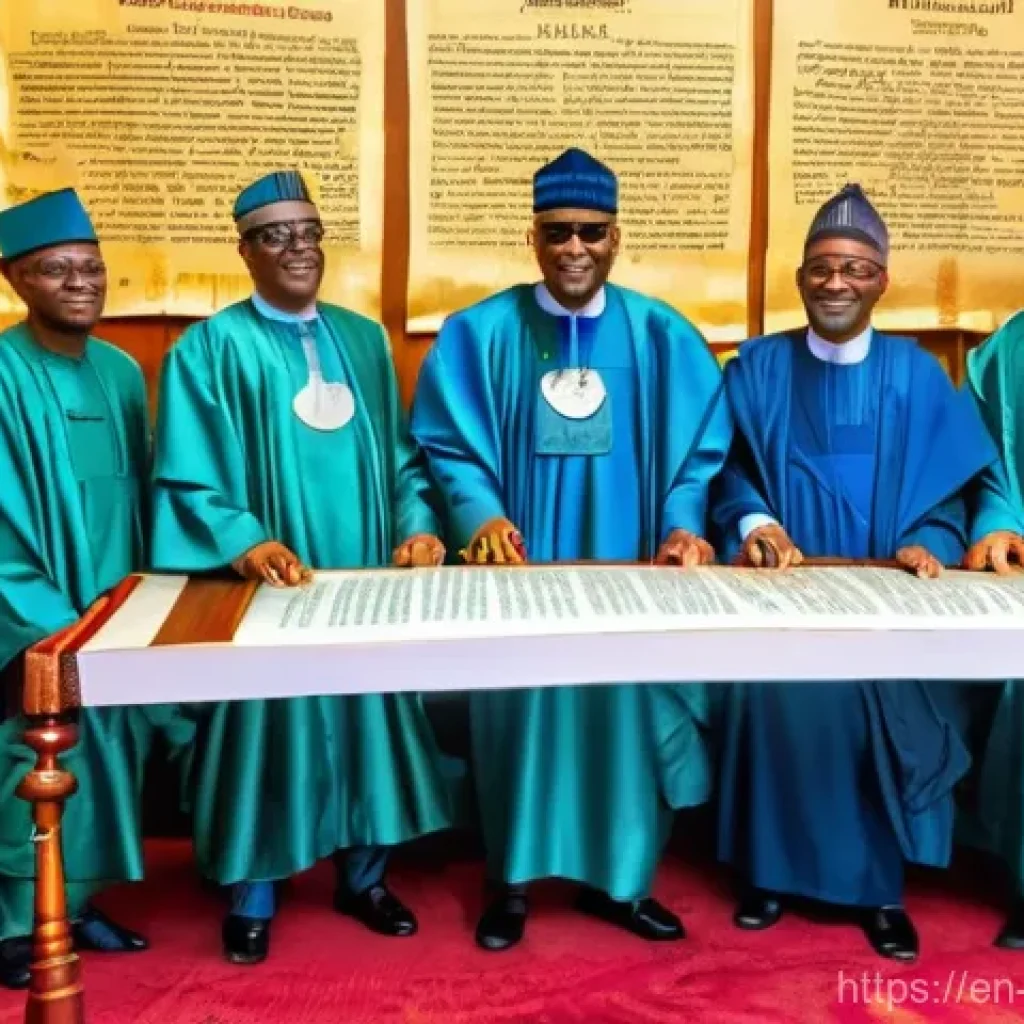
It’s truly intriguing to witness the ongoing discussions about the place of traditional rulers in Nigeria’s modern governance. Just this October 2025, a significant gathering of governors and traditional leaders converged in Lagos for the National Council of Traditional Rulers of Nigeria (NCTRN) meeting, where they passionately called for the formal enshrinement of monarchs’ roles in the constitutional framework.
Governor Hope Uzodinma, speaking on behalf of the President, really hit the nail on the head when he said that traditional rulers serve as the “strongest link” between the government and the people, even without explicit constitutional backing.
I mean, think about it – these leaders are often the first point of contact in their communities, playing crucial roles in peacebuilding, conflict resolution, and community development.
It’s a sentiment echoed by Lagos Governor Babajide Sanwo-Olu, who praised them for upholding the nation’s moral fabric. This isn’t just about ceremonial duties; it’s about acknowledging a deep-rooted cultural and societal influence that predates modern democracy.
Bridging Tradition and Constitutional Law
The debate around traditional rulers isn’t new; it’s a recurring theme in Nigeria’s constitutional discourse. Many argue that the 1999 Constitution “cleaned out” the significant roles traditional institutions once held in previous constitutional arrangements, dating back to colonial and First Republic eras.
I remember reading about how influential they were in the Native Authorities of the 1920s-1960s. The current push isn’t about replacing elected officials, but about integrating customary authority into Africa’s largest democracy with clear boundaries and checks.
It’s about finding a way to legally recognize the functions they already perform – fostering unity, resolving local disputes, and guiding community development.
This discussion is a delicate dance between preserving cultural heritage and ensuring democratic principles prevail. It feels like a moment where Nigeria is asking itself: how do we honor our past while building a truly inclusive future?
The outcome of this particular constitutional amendment effort will certainly be one to watch.
Federalism’s Enduring Tug-of-War: Resource Control

Who Owns the Wealth Beneath the Soil?
Ah, resource control – a topic that, for me, cuts right to the heart of Nigeria’s federal experiment. This isn’t just a dry legal debate; it’s a deeply emotional and economic struggle that affects millions.
The core issue, as I see it, boils down to who ultimately controls the natural resources, especially oil, found within a state’s borders, and how the revenues from these resources are shared.
Currently, Nigeria operates a centralized federal system where the federal government maintains significant control over these resources and dictates the revenue allocation formula.
This has historically led to immense frustration and even aggression, particularly in the oil-producing Niger Delta region, where communities feel alienated from the wealth extracted from their lands.
They often argue that despite being the source of national wealth, their areas remain underdeveloped and environmentally degraded. It’s a classic case of what many would call an unfair arrangement, sparking continuous demands for a more equitable system.
The Uneasy Balance of Power and Prosperity
The challenge of resource control truly highlights the ongoing difficulties with fiscal federalism in Nigeria. From my observations, this isn’t just about money; it’s about power.
When the federal government controls the purse strings so tightly, it inherently limits the financial autonomy and self-reliance of the states, creating a dependency that can stifle local development and innovation.
Many scholars and activists have tirelessly argued that for Nigeria to achieve “true federalism,” states must have greater control over their resources, contributing taxes to the federal center rather than waiting for allocations.
This shift is seen as crucial for promoting balanced development and reducing the intense competition for federal power that often exacerbates ethnic and regional tensions.
I recall how these debates often spiral into discussions about restructuring the entire country, a conversation that is never far from the national discourse.
The quest for this elusive balance between a strong central government and empowered federating units is, in my opinion, one of Nigeria’s most significant ongoing constitutional puzzles.
| Era | Key Constitutional Development | Impact on Governance |
|---|---|---|
| Colonial Era (1914-1960) | Amalgamation (1914), Clifford (1922), Richards (1946), Lyttleton (1954), Independence (1960) | Gradual move towards regional self-governance; introduction of federalism by Lyttleton; British retained ultimate authority until 1960. |
| First Republic (1960-1966) | Independence Constitution (1960), Republican Constitution (1963) | Parliamentary system; Queen as Head of State (1960), replaced by Nigerian President (1963); continued federal structure with strong regions. |
| Military Rule & Second Republic (1966-1999) | 1979 Constitution | Increased centralization of power; shift to presidential system; significant military influence in constitutional drafting; Biafran War (1967-1970). |
| Fourth Republic (1999-Present) | 1999 Constitution (as amended) | Return to civilian democratic rule; continuation of presidential federalism; ongoing calls for amendments to address perceived imbalances and promote inclusivity. |
Charting the Path Forward: Amendments and Aspirations
The 2025 Constitutional Review in Focus
It’s truly exciting to see the ongoing constitutional review process gather steam, with the House of Representatives targeting a December 2025 completion date for its comprehensive amendment package.
This isn’t just a routine legislative exercise; it’s a massive undertaking, with over 87 priority bills on the table, aiming to tackle critical areas like judicial independence, electoral reform, gender inclusion, and even local government autonomy.
I’ve been following the discussions, and it’s clear that the aim is to strengthen Nigeria’s democracy and create a more inclusive governance structure.
The fact that public hearings were held across the country’s six geopolitical zones back in July, followed by a plenary debate and voting scheduled for mid-October, tells me that there’s a serious intent to make this a truly participatory process.
It feels like a moment where the nation is collectively pausing to reassess its foundational document and genuinely strive for something better.
Hopes for a More Inclusive and Equitable Future
My biggest hope for these constitutional amendments is that they genuinely lead to a more inclusive and equitable Nigeria. I believe many Nigerians, myself included, are yearning for a political system that truly reflects the will of its diverse people, rather than perpetuating old grievances.
The discussions about giving traditional rulers a formal constitutional role, for instance, could be a meaningful step towards integrating indigenous structures into modern governance, provided it’s done with clear checks and balances.
Similarly, addressing issues of resource control and fiscal federalism could help alleviate tensions and foster more balanced development across the states.
While the journey is undoubtedly complex, with many competing interests, the current legislative efforts underscore a continuous quest for a more legitimate “Grundnorm.” It’s an opportunity, a chance to learn from the past, mend old wounds, and build a Nigeria where every citizen feels valued, heard, and truly a part of the national project.
That, to me, would be a remarkable achievement.
Concluding Thoughts
This has been quite a journey, hasn’t it? Diving into Nigeria’s constitutional evolution truly makes you appreciate the resilience and enduring spirit of its people.
From the colonial era’s imposed structures to the present day’s earnest calls for a more inclusive “Grundnorm,” the quest for a truly representative governance framework is palpable.
I’m personally excited to see how the ongoing constitutional review, with its focus on critical amendments, will shape the future, hopefully leading to a Nigeria where every voice truly matters and feels heard.
It’s a continuous work in progress, but the commitment to a better future is undeniable.
Useful Information
1. Always stay informed about current affairs and legislative changes in Nigeria. Political developments, especially around constitutional amendments, can have a significant impact on daily life and business opportunities.
2. If you’re looking to engage with local communities, understanding the role of traditional rulers can be incredibly valuable. They often serve as key gatekeepers and mediators, offering insights far beyond formal governmental structures.
3. For anyone considering investments or business ventures, pay close attention to discussions around resource control and fiscal federalism. These debates directly influence state autonomy and resource allocation, which are crucial for regional economic stability.
4. When traveling or interacting in Nigeria, remember the rich diversity of its ethnic groups and historical narratives. Acknowledging this tapestry, particularly the sensitivities around past events like the Biafran War, fosters better understanding and respect.
5. Keep an eye on youth movements and advocacy groups, especially those pushing for constitutional reform or greater regional autonomy. They often represent powerful currents of public opinion and future political shifts.
Key Takeaways
What I’ve really taken away from looking into Nigeria’s constitutional journey is that it’s a dynamic, ever-evolving process, deeply shaped by historical grievances, aspirations for self-determination, and the ongoing push for a truly federal and inclusive system.
The current efforts to amend the 1999 Constitution reflect a profound national desire to address imbalances, empower local governance, and ensure that the diverse voices of Nigeria are genuinely reflected in its foundational laws.
It’s a testament to the nation’s democratic spirit, always striving for a more perfect union.
Frequently Asked Questions (FAQ) 📖
Q: How does the Biafran War still echo in Nigeria’s political conversations and the ongoing quest for constitutional changes?
A: Oh, trust me, the shadow of the Biafran War, which was such a pivotal and painful chapter in Nigeria’s history, still looms large over so many of the political discussions we’re having today.
It’s not just some old history textbook entry; it’s a living, breathing part of the national consciousness, especially when we talk about things like federalism, who controls resources, and how power is shared equitably.
You see groups like the Indigenous People of Biafra, or IPOB, still actively campaigning for self-determination for the Igbo people. And honestly, when you look at their motivations, they’re deeply rooted in those historical grievances, a feeling of being marginalized, and concerns about economic deprivation in the southeastern parts of the country.
They genuinely feel that certain regions haven’t received fair investment, face political exclusion, and that resources aren’t distributed equitably. I’ve personally observed that many Nigerians, when discussing the inherent fairness of the federal system or the push for resource control, almost instinctively connect it back to the civil war.
It’s a poignant reminder that while the guns have been silent for decades, the deeper questions of unity, justice, and how a truly diverse nation can govern itself fairly are still very much open wounds that the current constitutional review process implicitly attempts to address.
Q: What are the main objectives and hurdles facing the ongoing efforts to amend Nigeria’s 1999 Constitution?
A: The current drive to amend Nigeria’s 1999 Constitution is a massive undertaking, and frankly, it’s one of the most critical things happening in Nigeria right now!
The House of Representatives has set an ambitious target of concluding their review by December 2025, which, let me tell you, is a tight schedule given the complexities.
Their main goal is to create a more legitimate and representative foundational document for Nigeria, reflecting the collective will of its diverse people.
We’re talking about tackling around 40 different alteration bills, covering everything from electoral reforms—think single-day elections and independent candidacy—to judicial reforms, local government autonomy, and even creating special legislative seats for women and persons with disabilities.
The Deputy Speaker, Benjamin Kalu, has openly spoken about the need to finally achieve a consensus on long-standing constitutional debates, particularly because the 1999 Constitution was seen by many as “handed down” rather than truly reflecting the people’s input.
But, as with any grand endeavor, there are definitely hurdles. From my perspective, one big challenge is the sheer magnitude of trying to mend so many aspects without a complete overhaul.
Some critics worry that this “piecemeal” approach might not truly address the deep-seated structural issues and could end up being more of a patchwork than a transformative change.
Plus, ensuring that all these proposed changes, especially those aimed at inclusion like gender representation, aren’t just symbolic gestures but actually have real teeth and enforcement mechanisms is crucial.
The National Assembly also has to navigate the intricate process of getting approvals from the State Houses of Assembly, which can be a political minefield.
It’s a delicate dance, but one that could fundamentally reshape Nigeria’s future.
Q: Why are traditional rulers advocating for a formal role in Nigeria’s constitution, and what implications could this have for the country’s governance?
A: This is a really fascinating development that I’ve been following closely, and it really speaks to Nigeria’s unique blend of the traditional and the modern.
Just recently, in October 2025, we saw prominent governors like Babajide Sanwo-Olu of Lagos and Hope Uzodimma of Imo passionately calling for traditional rulers to be formally enshrined in the constitutional framework.
Why now, you ask? Well, they argue that these monarchs are absolutely essential to governance, community stability, conflict resolution, and preserving Nigeria’s rich cultural heritage.
As Governor Sanwo-Olu put it, traditional rulers are “respected but not officially empowered”; they wield immense moral authority and influence, but operate in a kind of “gray area” without clearly defined constitutional roles.
It’s a call to correct what some see as a “historic omission.” Think back to Nigeria’s First Republic, where traditional rulers actually had constitutionally recognized functions—we’re talking about figures like the Oba of Lagos even sitting in the Senate!
But successive constitutions stripped away that formal recognition. So, this isn’t just about prestige; it’s about giving legal backing to a role they already perform daily in settling disputes and mediating between the government and the people.
The House of Representatives Committee on Constitution Review is even considering a bill to formalize their place in security and governance. If this pushes through, it could mean a more structured integration of traditional wisdom into modern governance, potentially strengthening grassroots development and peacebuilding.
However, it also raises questions about how to balance this with democratic principles and, as Governor Uzodimma himself advised, how to ensure monarchs remain neutral and don’t get entangled in partisan politics.
It’s a complex, but potentially very impactful, shift in Nigeria’s governance landscape.