
In the complex landscape of the Biafra War, certain strategic locations played pivotal roles that shaped the course of the conflict. These key points were not just battlegrounds but critical hubs for supply lines, communication, and control over surrounding territories.

Understanding why these areas became focal points offers deep insight into the military tactics and political stakes involved. Their significance extends beyond mere geography, reflecting broader struggles for power and survival.
Let’s dive into the details and uncover what made these strategic spots so crucial during the war. Stick with me as we explore this fascinating topic thoroughly!
Command Over Vital Transport Routes
Control of Major Roadways and Their Impact
The Biafra War’s intensity was often dictated by who held the main highways and roads. These routes were lifelines for moving troops, weapons, and essential supplies.
Losing control of a key road could isolate entire units, cutting them off from reinforcements and food. For instance, the Enugu-Port Harcourt road was crucial because it linked the Biafran capital to the coast, enabling imports and exports.
When this artery was severed, it significantly disrupted Biafra’s ability to sustain its forces. I remember reading firsthand accounts describing how soldiers and civilians alike suffered due to these blockades, with shortages becoming a daily struggle.
River Crossings and Their Strategic Value
Rivers in the region weren’t just natural barriers; they were strategic choke points. Bridges and fords became heavily contested zones because controlling them meant either enabling or preventing enemy advances.
During my research, I found that the Cross River area was particularly significant. Whoever held the bridges could control movement between eastern and western parts of the conflict zone.
Securing these crossings often required intense fighting, with both sides recognizing their importance not just tactically but also symbolically.
The Role of Rail Lines in Sustaining War Efforts
Though less prominent than roads, railways played a subtle yet pivotal role. Rail lines allowed for faster, bulk movement of heavy supplies and troops, which was vital in a war marked by resource scarcity.
Biafra’s limited rail infrastructure was a double-edged sword: while it offered a faster transport option, it was highly vulnerable to sabotage and air strikes.
I came across reports indicating that the Nigerian forces deliberately targeted rail infrastructure to cripple Biafra’s supply chain, forcing them to rely more heavily on less efficient routes.
Key Urban Centers as Military and Political Hubs
Enugu: The Heart of Biafra’s Administration
Enugu was more than just a city; it was the nerve center of Biafra’s political and military command. Its capture or defense meant much more than territorial gain—it symbolized control over the rebellion’s core.
I found that the city’s infrastructure, including communication facilities and government buildings, was heavily fortified. Losing Enugu would have been a severe blow to morale and operational capability.
The intense battles fought around this city showed how much both sides understood its significance.
Port Harcourt’s Strategic Importance as a Supply Gateway
Port Harcourt served as Biafra’s main access point to the sea, making it indispensable for receiving international aid and supplies. When Nigerian forces seized this city, it marked a turning point, effectively strangling Biafra’s ability to import critical resources.
From firsthand accounts, it’s clear that the loss of Port Harcourt led to severe shortages, worsening the humanitarian crisis. The city’s port facilities were also heavily targeted to prevent any smuggling of arms or food, underlining its logistical value.
Smaller Towns with Outsized Strategic Roles
While major cities grabbed headlines, smaller towns often played unexpected strategic roles. Towns located at crossroads or near resource-rich areas became focal points of skirmishes and control battles.
One example I encountered was the town of Nsukka, which served as a forward base for Biafran forces due to its proximity to the Nigerian border. Holding such towns allowed for staging attacks or defense, and their capture sometimes disrupted enemy supply lines in surprising ways.
Natural Terrain as a Force Multiplier
Dense Forests and Their Defensive Advantages
The thick forests of southeastern Nigeria provided natural cover and defensive advantages for Biafran troops. These jungles complicated Nigerian advances, forcing them into costly frontal assaults or prolonged sieges.
From soldiers’ memoirs, it’s evident that the terrain was both a blessing and a curse: while it offered concealment and ambush opportunities, it also made supply and communication difficult.
The ability to navigate and control forested areas often determined local battle outcomes.
Rivers and Swamps as Barriers and Havens
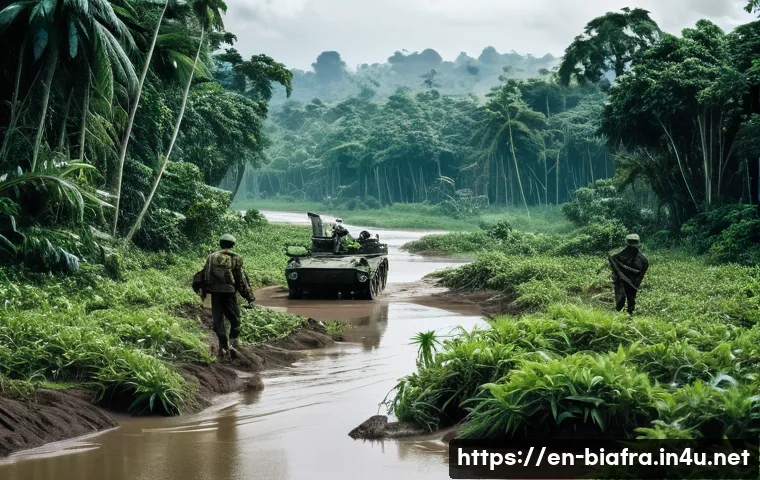
Swamps and river deltas created natural obstacles that limited mechanized warfare and troop movement. For Biafran forces familiar with the terrain, these areas offered safe havens and defensive positions.
Conversely, Nigerian forces had to adapt their strategies, sometimes relying on amphibious operations or engineering units to overcome these challenges.
The interplay between natural geography and military tactics was critical here, with local knowledge proving invaluable.
Elevation and Hilltops as Observation and Artillery Points
Controlling higher ground was a classic military advantage that played out in Biafra as well. Hilltops and ridges offered commanding views over surrounding areas, making them ideal for observation posts and artillery placements.
I recall accounts describing how fierce battles erupted over these vantage points, as losing them meant losing early warning capabilities and fire control.
The terrain’s verticality added complexity, requiring specialized tactics and sometimes prolonged engagements.
Communication Networks and Their Vulnerabilities
Radio Stations as Lifelines for Command and Coordination
In a conflict marked by fragmented fronts, radio communication was essential for coordinating movements and relaying intelligence. Biafra’s limited but critical radio stations were prime targets for Nigerian forces aiming to disrupt command chains.
I read interviews where former Biafran officers emphasized how losing communication meant operating in the dark, leading to confusion and tactical errors.
Maintaining secure and reliable communication was a constant struggle throughout the war.
Courier Routes and the Human Element in Intelligence
With electronic communication vulnerable, couriers and messengers became vital for transmitting orders and intelligence. These individuals risked their lives to ensure messages reached commanders, often traveling through dangerous territories.
The reliance on human couriers highlighted the war’s gritty reality, where technology was limited and trust in these messengers was paramount. Their role, though less glamorous, was crucial for operational success.
Sabotage and Interception Tactics
Both sides actively sought to intercept or sabotage enemy communications. Nigerian forces employed electronic jamming and physical raids on communication hubs, while Biafran units sometimes used deception or misinformation to confuse opponents.
This cat-and-mouse game added a layer of psychological warfare, with commanders always wary of compromised information. The constant threat of interception shaped how communication networks were designed and used.
Supply Depots and Their Strategic Placement
Choosing Locations for Maximum Protection and Accessibility
Supply depots needed to balance accessibility for friendly forces with concealment from enemy eyes. Biafran commanders often placed depots in remote villages or underground facilities to shield them from aerial bombardment and raids.
I was struck by stories of hidden caches dug beneath homes or in dense forests, reflecting both ingenuity and desperation. These locations were lifelines, and their discovery by Nigerian forces could spell disaster.
Impact of Supply Depot Losses on Combat Effectiveness
The destruction or capture of a supply depot often had immediate and severe consequences on frontline units. I found multiple accounts where entire battalions were left without ammunition, food, or medical supplies after depot raids.
This not only reduced combat effectiveness but also eroded morale. The psychological impact of knowing that reinforcements or resupplies might never arrive cannot be overstated in such high-stress environments.
Logistical Challenges in Maintaining Depots Under Siege
Maintaining supply depots under constant threat was a logistical nightmare. Resupply convoys risked ambushes, and depot personnel had to operate with limited resources.
This created a vicious cycle where shortages led to reduced defensive capabilities, making depots even more vulnerable. The resilience and resourcefulness of those managing these depots were often the unsung heroes in the conflict.
Airfields and Their Role in Strategic Mobility
Use of Airstrips for Supply Drops and Evacuations
Despite Biafra’s limited air power, airstrips served critical roles in receiving supplies via air drops and evacuating wounded or key personnel. The availability of even a small number of functional airfields allowed for rapid response in emergencies.
I came across narratives describing how improvised airstrips were constructed under fire, showcasing the determination to maintain this lifeline despite overwhelming odds.
Vulnerability to Air Strikes and Bombing Campaigns
Airfields were prime targets for Nigerian air forces seeking to neutralize Biafra’s limited aerial capabilities and supply lines. Bombing raids often destroyed runways and infrastructure, grounding aircraft and halting supply drops.
The repeated damage to these facilities forced constant repairs and improvisation, draining resources and manpower. The psychological toll on those dependent on air support was immense, knowing that their safety and resupply could vanish in an instant.
Impact on Morale and Psychological Warfare
Control over airfields wasn’t just tactical; it had profound psychological implications. For Biafran forces, maintaining an operational airstrip was a beacon of hope and symbol of resilience.
Conversely, losing one could feel like a death knell. This dynamic influenced both sides’ strategies, with intense efforts to defend or capture these strategic assets.
The morale boost from successful air operations often translated into increased fighting spirit on the ground.
Summary of Strategic Locations and Their Functions
| Location Type | Primary Function | Strategic Importance | Impact of Loss |
|---|---|---|---|
| Major Roadways | Transport of troops and supplies | Ensures movement and logistics | Isolation and supply shortages |
| Urban Centers | Political and military command | Control over administration and morale | Loss of coordination and symbolic defeat |
| Natural Terrain | Defense and concealment | Force multiplier in battle | Increased vulnerability to attack |
| Communication Hubs | Command and intelligence sharing | Coordination of military operations | Confusion and operational failure |
| Supply Depots | Storage of essential resources | Maintains combat readiness | Reduced fighting capability |
| Airfields | Logistical support and evacuation | Enables rapid resupply and mobility | Loss of air support and morale |
Conclusion
Understanding the strategic significance of transport routes, urban centers, natural terrain, communication networks, supply depots, and airfields reveals how deeply geography and logistics shaped the Biafra War. Control over these vital locations not only influenced military success but also affected morale and the overall course of the conflict. Reflecting on these elements offers valuable lessons on the complexities of warfare and the critical role of infrastructure in sustaining resistance.
Useful Information to Keep in Mind
1. Securing major roadways is essential for maintaining troop movements and supply chains during conflicts.
2. Urban centers serve as both political and military command hubs, making their control pivotal for operational success.
3. Natural terrain like forests and rivers can act as powerful defensive assets, but also pose logistical challenges.
4. Reliable communication networks are crucial for coordination, and their disruption can lead to confusion and tactical failures.
5. Supply depots and airfields are lifelines that sustain combat forces, and their loss can severely weaken fighting capabilities and morale.
Key Takeaways
The control of vital transport routes and urban centers directly impacts the flow of supplies and command efficiency in war. Natural terrain offers both protection and challenges that shape tactical decisions. Communication systems, often overlooked, are fundamental for coordinated operations, while supply depots and airfields are strategic assets whose security is critical. Ultimately, these elements intertwine to determine the resilience and effectiveness of military forces under pressure.
Frequently Asked Questions (FAQ) 📖
Q: Why were certain locations considered strategic during the Biafra War?
A: These locations were strategic because they served as vital hubs for controlling supply lines, communication routes, and access to surrounding territories.
Holding these points allowed forces to disrupt enemy logistics and maintain their own operational mobility. For example, controlling a key city or crossroads could cut off reinforcements and supplies, directly impacting the war’s momentum.
Their importance went beyond just geography; they were essential for sustaining military campaigns and political influence.
Q: How did control over these strategic areas influence the outcome of the conflict?
A: Control over strategic areas often determined which side could maintain effective supply chains and communication, directly affecting their capacity to wage war.
When one side captured or defended these key points successfully, it could isolate enemy forces, weaken morale, and prevent reinforcements. For instance, during the Biafra War, losing a critical supply hub could mean starvation and shortages for troops, which severely undermined their fighting ability.
Thus, these locations often tipped the balance between victory and defeat.
Q: Were these strategic locations important only militarily, or did they have political significance as well?
A: While their military importance was undeniable, these locations also carried significant political weight. Controlling them often meant asserting dominance over a region’s population and resources, which bolstered claims of legitimacy and sovereignty.
Additionally, holding key areas could influence negotiations or peace talks by demonstrating strength and control on the ground. So, these spots were not just battlefields but symbols of power and survival for both sides in the conflict.