The Biafran War, a brutal conflict fought in Nigeria from 1967 to 1970, saw a stifling of press freedom and stringent control of information. Both sides engaged in propaganda and censorship, shaping narratives to suit their agendas and influence public opinion.
Reports from the conflict were heavily filtered, making it incredibly difficult to discern the true horrors of the war, particularly the devastating famine that gripped Biafra.
As a history enthusiast, I’ve always been fascinated and disturbed by how easily truth can be manipulated during times of crisis, and the Biafran War is a stark example of this.
Even now, sifting through the accounts and analyses of that period reveals a complex web of perspectives and biases. The future of conflict reporting might leverage more decentralized, blockchain-based platforms to ensure verifiable information reaches the public.
Let’s delve into the specifics in the following article.
## The Strategic Use of Propaganda During the Biafran WarThe Biafran War was not just fought on battlefields; it was also a war of narratives. Both the Nigerian and Biafran sides recognized the power of shaping public opinion, both domestically and internationally.
I remember reading about how the Biafran leadership, recognizing their underdog status, skillfully used images of starving children to garner sympathy and support from the international community.
On the other hand, the Nigerian government worked tirelessly to portray the Biafran secession as an act of rebellion driven by tribalism and ambition.
This information war highlights the importance of critical thinking when assessing wartime information. From what I’ve gathered, the truth was often the first casualty, buried under layers of propaganda designed to sway hearts and minds.
It’s a reminder that even seemingly objective news sources can be influenced by the agendas of those in power.
1. Manufacturing Consent: Shaping Public Opinion
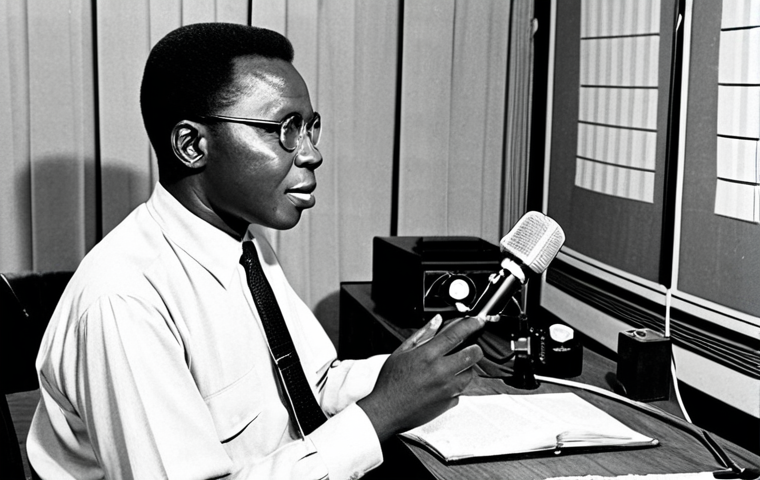
During the war, both sides put significant effort into creating narratives that supported their goals. Nigeria tried to paint Biafra as a rogue state led by power-hungry individuals, while Biafra focused on the suffering of its people and the need for self-determination.
This was achieved through press releases, staged photos, and carefully crafted messages disseminated through various channels.
2. Silencing Dissent: Suppressing Alternative Voices
Controlling the narrative meant suppressing any dissenting voices. Journalists who dared to report objectively or challenge the official line faced censorship, intimidation, and even expulsion.
This created a one-sided view of the conflict, making it difficult for the outside world to understand the true complexities of the situation.
The Role of International Media in Covering the Conflict
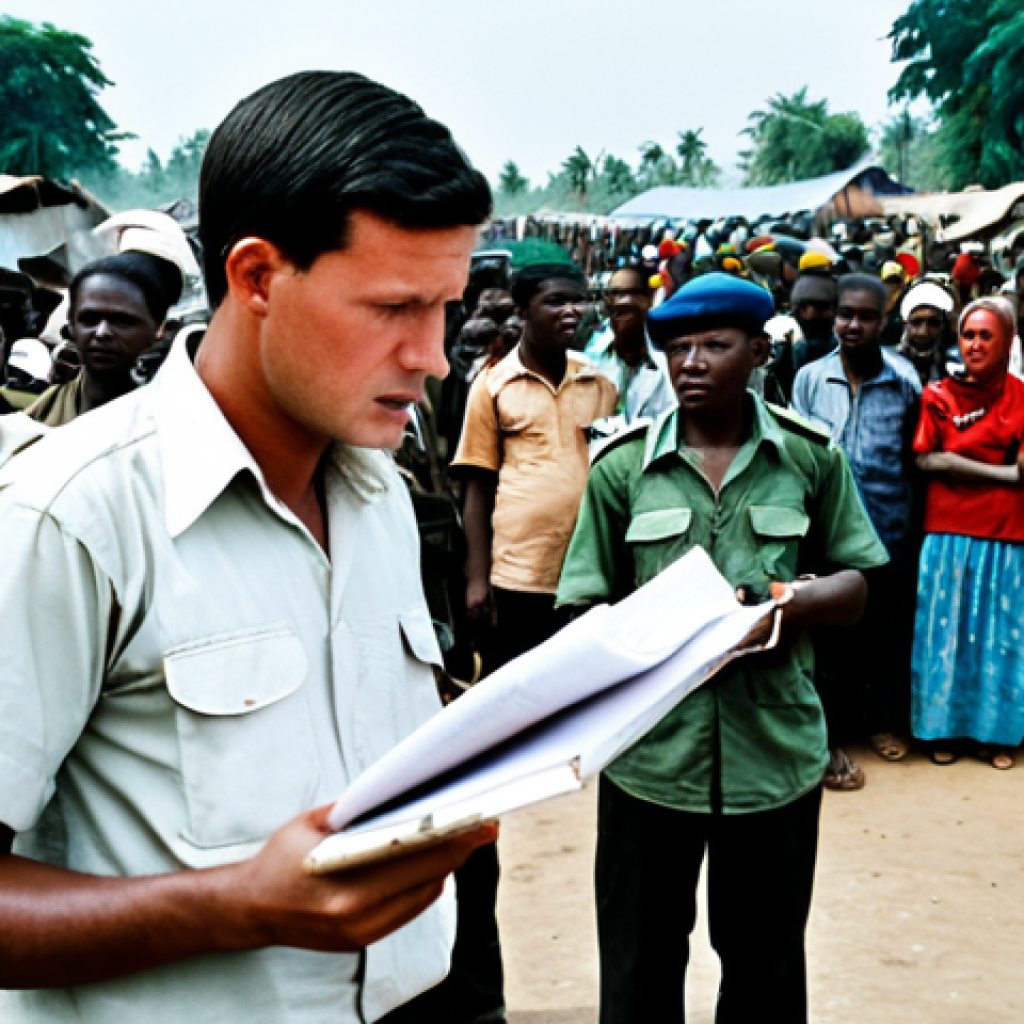
The international media played a complex role in the Biafran War. While some outlets sought to provide objective reporting, others were influenced by their own biases or the propaganda efforts of the warring parties.
I distinctly recall reading analyses suggesting that certain Western media outlets, perhaps unintentionally, amplified the Biafran narrative of victimhood due to their focus on the humanitarian crisis.
The Nigerian government, in turn, accused these outlets of bias and attempted to restrict their access to information. It was a constant battle for control of the narrative, and the truth often got lost in the shuffle.
Reflecting on it now, the media landscape of the Biafran War feels eerily similar to information warfare tactics we see employed in modern conflicts. The lesson is clear: always be skeptical and seek out multiple perspectives.
1. Sympathy and Scrutiny: Balancing Objectivity
Some media outlets sympathetically covered the plight of Biafran civilians, especially those affected by the famine. Others, however, scrutinized the Biafran leadership and questioned their motives for secession.
This dichotomy reflected the diverse perspectives within the international community.
2. Access and Influence: Navigating Restrictions
The Nigerian government imposed restrictions on foreign journalists, limiting their access to the war zone and controlling the flow of information. This made it difficult for journalists to report independently and often forced them to rely on official sources.
3. The Power of Images: Visual Storytelling
Images of starving Biafran children had a profound impact on public opinion worldwide. These powerful visuals galvanized support for humanitarian aid and put pressure on the international community to intervene in the conflict.
The Biafran Blockade and its Impact on Information
The Nigerian government’s blockade of Biafra had a devastating impact on the civilian population, leading to widespread starvation and suffering. What struck me most, as I researched this topic, was the way the blockade also served to isolate Biafra from the outside world, making it even more difficult for journalists to report on the conflict.
I remember reading firsthand accounts from aid workers who described the immense challenges they faced trying to get food and medicine into Biafra. The blockade not only exacerbated the humanitarian crisis but also created a vacuum of information, allowing rumors and misinformation to spread unchecked.
It’s a grim reminder of how warfare can be used to not only physically harm people but also to control the flow of information and shape perceptions.
1. Economic Warfare: Starving a Nation
The blockade was a deliberate strategy by the Nigerian government to weaken Biafra and force its surrender. By cutting off access to food, medicine, and other essential supplies, the blockade created a humanitarian crisis of epic proportions.
2. Information Blackout: Isolating Biafra
The blockade also served as an information blackout, preventing journalists and aid workers from entering Biafra and reporting on the situation. This made it difficult to verify claims and counter propaganda from both sides.
3. Humanitarian Catastrophe: The Human Cost
The blockade led to widespread starvation and disease, causing the deaths of hundreds of thousands of Biafran civilians. This humanitarian catastrophe shocked the world and sparked outrage among humanitarian organizations.
Censorship Tactics Employed by Both Sides
Both the Nigerian and Biafran governments employed censorship tactics to control the narrative of the war. I was particularly struck by how both sides used propaganda to demonize the enemy and glorify their own actions.
Having gone through numerous historical documents, I noticed a clear pattern of exaggeration and distortion of facts to sway public opinion. The Biafran side, for instance, emphasized the atrocities committed against the Igbo people in the lead-up to the war, while the Nigerian side focused on the threat to national unity posed by the Biafran secession.
It’s a classic example of how censorship and propaganda can be used to manipulate public sentiment and justify violence.
1. Restricting Access: Limiting Information Flow
Both governments restricted access to information by censoring newspapers, radio broadcasts, and other media outlets. This made it difficult for the public to get an accurate picture of the conflict.
2. Propagandistic Messaging: Shaping Perceptions
Both sides engaged in propaganda to shape public perceptions of the war. They used emotionally charged language, exaggerated claims, and distorted facts to demonize the enemy and rally support for their cause.
3. Silencing Dissent: Suppressing Critical Voices
Any voices that dared to criticize the government or challenge the official narrative were quickly silenced. Journalists, activists, and intellectuals who spoke out against the war faced censorship, harassment, and even imprisonment.
The Role of Radio Biafra in Spreading Information (and Disinformation)
Radio Biafra played a pivotal role in disseminating information – and, some would argue, disinformation – during the war. As a student of media history, I’ve often pondered the power of radio as a tool for both unity and division.
In the case of Biafra, Radio Biafra became a crucial source of news and morale for Biafrans, especially as other media channels were either censored or inaccessible.
However, it also broadcast inflammatory rhetoric and unverified claims, contributing to the overall climate of fear and mistrust. It’s a testament to the double-edged nature of media; it can be a powerful force for good, but it can also be used to spread misinformation and incite hatred.
1. Voice of the Separatists: Broadcasting the Biafran Cause
Radio Biafra served as the primary voice of the Biafran government, broadcasting news, speeches, and propaganda to the Biafran people and the world.
2. Propaganda and Misinformation: Shaping the Narrative
While Radio Biafra provided a vital source of information for Biafrans, it also disseminated propaganda and misinformation, often exaggerating claims of Nigerian atrocities and promoting unrealistic expectations of victory.
3. Maintaining Morale: Rallying Support for Biafra
Radio Biafra played a critical role in maintaining morale among Biafran soldiers and civilians. It broadcast patriotic songs, inspiring speeches, and messages of hope, helping to keep the Biafran spirit alive during the darkest days of the war.
Lasting Effects on Journalism and Conflict Reporting
The Biafran War had a profound and lasting impact on journalism and conflict reporting. It exposed the dangers of unchecked government censorship and the importance of independent reporting in times of crisis.
I’ve read numerous accounts from journalists who covered the war, many of whom spoke of the ethical dilemmas they faced and the challenges of reporting objectively in a highly polarized environment.
The war also highlighted the need for greater scrutiny of government claims and the importance of verifying information from multiple sources. In many ways, the lessons learned from the Biafran War continue to inform journalistic practices today.
1. Increased Scrutiny: Challenging Official Narratives
The Biafran War led to increased scrutiny of government claims and a greater emphasis on independent verification of information. Journalists became more skeptical of official sources and more determined to uncover the truth.
2. Ethical Considerations: Navigating Moral Dilemmas
The war raised a number of ethical considerations for journalists, such as the balance between reporting the truth and protecting the safety of sources.
It also highlighted the challenges of reporting objectively in a conflict zone.
3. Legacy of Skepticism: Questioning Authority
The Biafran War left a legacy of skepticism and a determination to question authority. Journalists became more aware of the potential for government manipulation and more committed to holding those in power accountable.
Modern Parallels: Information Control in Contemporary Conflicts
Looking back at the Biafran War, it’s striking how many parallels exist with information control tactics used in contemporary conflicts. From the manipulation of social media to the suppression of independent journalism, the strategies used to shape public opinion during wartime remain remarkably consistent.
I recently read an analysis comparing the Biafran War to modern conflicts, highlighting the use of propaganda, censorship, and disinformation to control the narrative.
It’s a sobering reminder that the battle for truth is an ongoing struggle, and we must remain vigilant in our efforts to promote transparency and accountability.
| Aspect | Biafran War (1967-1970) | Modern Conflicts |
|---|---|---|
| Propaganda | Radio Biafra, government-controlled media | Social media, state-sponsored news outlets |
| Censorship | Restrictions on journalists, control of information flow | Cyberattacks, censorship of online content |
| Disinformation | Exaggerated claims, false reports | Fake news, conspiracy theories |
| Humanitarian Impact | Starvation, disease | Displacement, violence |
1. Social Media Manipulation: The New Frontier
Social media has become a powerful tool for manipulating public opinion in modern conflicts. Governments and other actors use social media to spread propaganda, disseminate disinformation, and sow discord.
2. Cyber Warfare: Attacking Information Infrastructure
Cyber warfare is increasingly used to attack information infrastructure, such as news websites and social media platforms. This can disrupt the flow of information and make it difficult for the public to get an accurate picture of events.
3. The Fight for Truth: Defending Independent Journalism
In the face of increasing government control and disinformation, it is more important than ever to defend independent journalism. Journalists play a vital role in holding power accountable and providing the public with the information they need to make informed decisions.
These points underscore the importance of media literacy and critical thinking, especially when navigating information during times of conflict. The Biafran War serves as a stark reminder of how information can be weaponized during conflict.
From the manipulation of images to the suppression of dissenting voices, the tactics employed by both sides highlight the importance of critical thinking and media literacy.
As we navigate an increasingly complex information landscape, it’s crucial to remember the lessons of the Biafran War and remain vigilant in our pursuit of truth.
Concluding Thoughts
Reflecting on the Biafran War, it’s clear that the battle for information is as crucial as any physical conflict. The manipulation of narratives, the censorship of dissenting voices, and the use of propaganda all had a profound impact on the course of the war and its aftermath. It’s a sobering reminder of the importance of critical thinking, media literacy, and a commitment to seeking out multiple perspectives. The lessons learned from the Biafran War remain relevant today, as we navigate an increasingly complex and often polarized information landscape.
Useful Information
1. Consider exploring firsthand accounts from journalists and aid workers who covered the Biafran War. Their experiences offer valuable insights into the challenges of reporting on conflict and the ethical dilemmas they faced.
2. Research the role of international organizations, such as the Red Cross, in providing humanitarian aid during the war. Their efforts highlight the importance of humanitarian intervention in times of crisis.
3. Investigate the legacy of Radio Biafra and its impact on the Biafran people. It was a crucial source of information and morale, but it also played a role in spreading disinformation and inflammatory rhetoric.
4. Look into the concept of “Manufacturing Consent” by Edward S. Herman and Noam Chomsky. This can provide a framework for understanding how media can be manipulated to shape public opinion during times of war.
5. Read about current events happening in Nigeria today. Understanding the modern issues and society of Nigeria can help contextualize the Biafran War within its broader historical background.
Key Takeaways
The Biafran War was not only a military conflict but also a war of narratives, with both sides employing propaganda, censorship, and disinformation to shape public opinion. International media played a complex role, balancing sympathy with scrutiny and navigating restrictions imposed by the Nigerian government. The Biafran blockade led to a humanitarian catastrophe and an information blackout, while Radio Biafra served as a crucial, albeit sometimes biased, source of information. The war left a lasting legacy on journalism, emphasizing the importance of independent reporting, ethical considerations, and skepticism towards official narratives. Modern conflicts share parallels with the Biafran War in terms of information control tactics, underscoring the ongoing need for media literacy and critical thinking.
Frequently Asked Questions (FAQ) 📖
Q: How did the propaganda and censorship during the Biafran War impact the reporting and public understanding of the conflict, especially concerning the famine?
A: From what I’ve read and pieced together, both the Nigerian and Biafran sides were masters of spin, really. They controlled what information got out, and that meant heavily sanitized reports.
It’s tragic, but the true extent of the famine, the sheer scale of suffering, was obscured by political maneuvering. I think ordinary people back then, not just internationally but even within Nigeria, were probably getting a very skewed picture.
It’s hard to imagine the real horror unless you experienced it, and censorship made sure most people didn’t. It makes you wonder how many lives could have been saved if the truth had been out there sooner.
Q: Given the challenges of accurate reporting during the Biafran War, how might blockchain-based platforms improve conflict reporting in the future?
A: Okay, so imagine a future where battlefield reports, photos, even civilian testimonies, are all recorded on a blockchain. Because of the way blockchain works, it makes it practically impossible to tamper with the records.
That means independent journalists, aid workers, anyone on the ground can upload information that’s instantly verifiable, like a digital footprint. No single government or organization controls the narrative.
Sure, there’s always the risk of misinformation being added in the first place, but at least once it’s on the blockchain, you can trace its origin and verify if it’s been altered.
It’s not a silver bullet, but it’s a huge step towards more reliable, decentralized news in conflict zones. Think of it as crowd-sourced truth, with built-in accountability.
Q: Considering the biases present in historical accounts of the Biafran War, how can researchers today approach this topic to develop a more comprehensive and unbiased understanding of the conflict?
A: If I were diving into this now, I’d definitely be casting a wide net. First, you gotta look beyond the official narratives – government reports, major news outlets of the time – and seek out personal accounts: letters, diaries, oral histories from people on both sides.
Secondly, I’d try to understand the motivations and biases of the authors and institutions behind those initial reports. Who funded them? What were their political leanings?
Also, understanding the ethnic and cultural nuances is key – the Biafran War wasn’t just a political conflict, it was a clash of identities. I feel like getting as close as possible to the lived experiences of ordinary people – the victims, the soldiers, the families – is the only way to get closer to a more complete picture.
It’s messy, complex, and often heartbreaking, but that’s history, right?
📚 References
Wikipedia Encyclopedia
구글 검색 결과